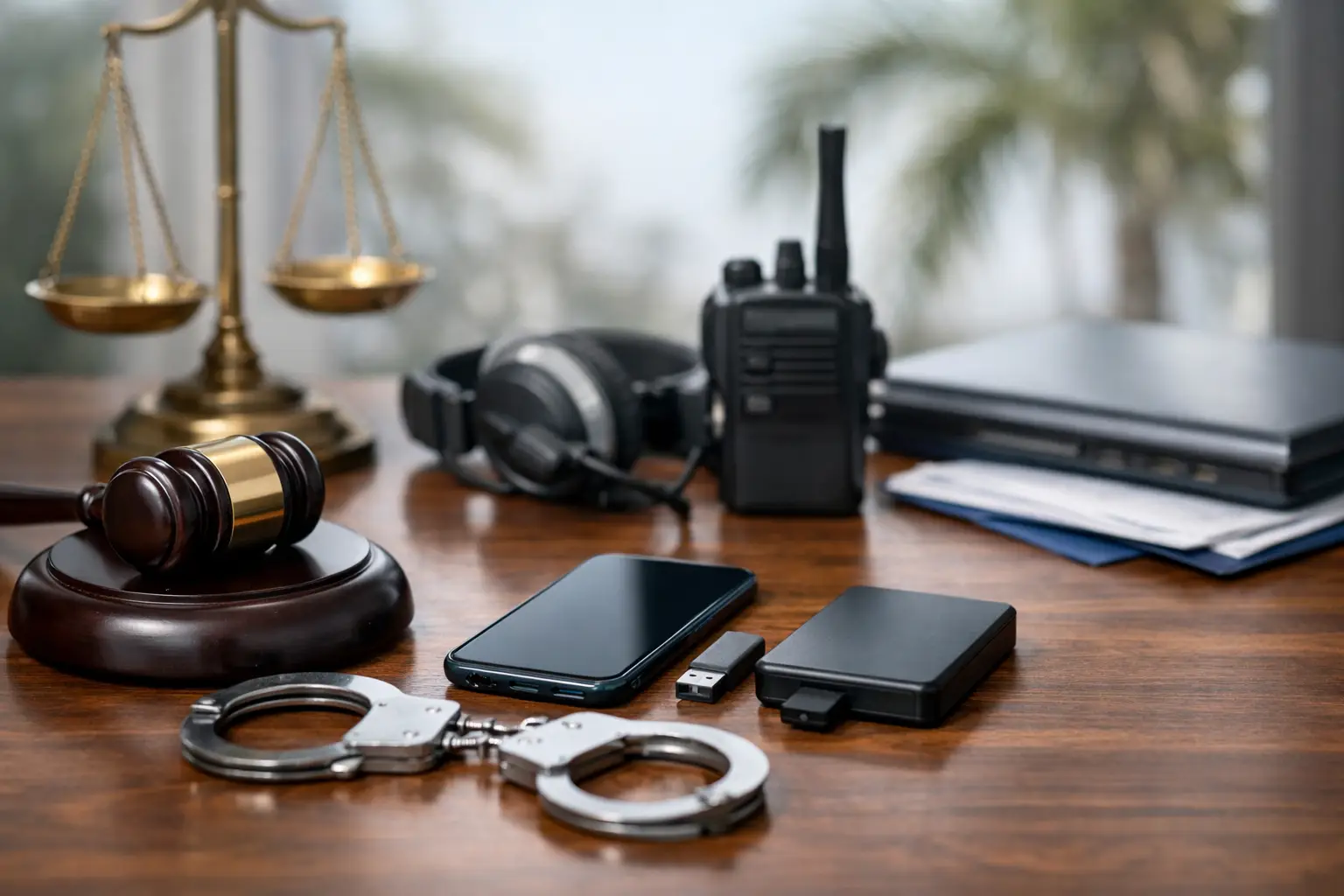
Police may have your phone, laptop, cloud data, social media messages, or a forensic report they claim proves their case. That does not mean they obtained it legally. This digital evidence suppression guide explains where a serious Florida defense begins: by forcing the State to justify every search, seizure, extraction, and conclusion.
In sex crime cases, digital material can become the center of the prosecution’s narrative. A text thread may be stripped of context. Location data may be less precise than police suggest. An image may be found on a device without proving who knowingly possessed it. A forensic examiner’s report may sound technical while resting on shortcuts, assumptions, or an unlawful search.
Your freedom cannot be defended by accepting the government’s version of the evidence. The defense must move fast, preserve what matters, and attack the weak points before a prosecutor turns a phone download into a conviction story.
What Suppression Actually Means
Suppression is a legal remedy. When law enforcement obtains evidence in violation of the Fourth Amendment, the Florida Constitution, or other applicable legal protections, a defense attorney can ask the court to keep that evidence out of the case.
The fight usually happens through a motion to suppress and an evidentiary hearing. The prosecution does not get to rely on a police report alone if the defense challenges the legality of a search. Officers, investigators, and sometimes forensic personnel may have to testify. Their timeline, warrant application, claimed consent, and handling of the device can be tested under oath.
A successful suppression ruling can remove more than one item. If an illegal phone search produced messages, images, account information, contacts, or leads to additional evidence, the defense may argue that later discoveries were also tainted. The scope of that argument depends on the facts, the source of the later evidence, and whether the State claims an exception.
Suppression is not automatic just because evidence is damaging. The issue is how the government got it and whether it can prove the search was lawful. That distinction matters. A bad forensic conclusion may be challenged at trial even if the evidence was legally seized. An unlawful search may justify suppression even where the State believes the device contains incriminating material.
Digital Evidence Suppression Guide: Where Cases Break
Digital searches are different from looking through a glove compartment. A smartphone can contain years of private communications, photographs, financial records, medical information, location history, browser data, and access to cloud-based accounts. That depth of information is exactly why courts often demand careful constitutional justification.
The stop, detention, or seizure came first
The first question is often ignored: Why did police stop you, detain you, take your device, or enter the place where they found it? If the initial stop or seizure lacked legal justification, the defense may have a basis to challenge what followed.
For example, officers may claim they seized a phone for “officer safety” or to preserve evidence. Those claims have limits. Taking physical possession of a phone is not the same as having authority to search its contents. The facts matter: who owned the device, where it was found, whether you were under arrest, what officers knew at the time, and whether any real emergency existed.
The warrant was too broad, unsupported, or stale
A search warrant is not a blank check. It must be supported by probable cause and should particularly describe the place to be searched and the items to be seized. In a digital case, that can mean hard questions about whether the warrant authorized a search of the device itself, which categories of data were sought, and why investigators had reason to believe evidence would be found there.
Overbroad warrants are a recurring problem. A warrant may seek virtually every file, message, application, photo, and account on a device while offering little connection between that sweeping search and the alleged offense. The defense can challenge whether the affidavit gave the judge a real factual basis for such an intrusive search.
Timing can also matter. Information used to obtain a warrant may be stale. An old allegation does not always establish probable cause to search a current device, account, or residence. The State will argue that digital data can remain available for a long time. Sometimes that argument has force. Sometimes the gap in time exposes how thin the warrant really was.
Police relied on consent that was not valid
Investigators frequently say, “He consented.” That phrase is not the end of the analysis.
Consent must be voluntary, and its scope matters. Did you clearly agree to a search, or did officers treat an ambiguous response as permission? Were you surrounded by officers, detained, threatened with arrest, or pressured into believing you had no choice? Did you agree to let police look at one item but not authorize a full forensic extraction? Did someone else supposedly consent to search a device or account that was actually yours?
A person can sometimes limit or withdraw consent. Whether that happened is a fact-driven question, and body-camera footage, interview recordings, texts, and officer reports can become critical. Do not assume a signed form settles the issue. The circumstances surrounding it may tell a different story.
The State claims an emergency or another exception
Police sometimes search without a warrant by invoking an exception, such as exigent circumstances, search incident to arrest, plain view, or an inventory search. Those exceptions are narrow and fact-specific.
The government may argue that officers feared evidence would be remotely deleted. But the possibility that digital evidence could disappear does not automatically authorize a full search of a phone. Officers may have other ways to secure a device while seeking a warrant. The precise sequence of events matters.
Likewise, an inventory search is not supposed to be an investigative fishing expedition. If police impounded property, the defense can examine whether they followed standardized procedures or used “inventory” as a label to hunt for evidence.
Forensic Reports Must Be Challenged Separately
Not every digital evidence problem is a suppression problem. A device may have been lawfully seized and searched, yet the State can still struggle to prove what the data means, who controlled it, or whether the forensic process was reliable.
A forensic extraction does not establish guilt by itself. It may show that data existed on a device. It may not prove who created it, viewed it, downloaded it, sent it, or knew it was there. Shared devices, reused passwords, automatic downloads, cached files, cloud synchronization, malware, remote access, and account compromise can change the analysis.
The defense should scrutinize the chain of custody. Who seized the device? Was it properly documented, secured, and preserved? Who accessed it before imaging? Was a forensic copy created in a way that can be verified? Did the examiner use validated tools and preserve the original data? Missing documentation and unexplained handling do not always lead to suppression, but they can undermine admissibility, reliability, and the weight a jury gives the evidence.
Context is equally important. A prosecutor may present selected messages or screenshots that appear devastating in isolation. The full conversation, timestamps, deleted-but-recovered material, metadata, and communications from other accounts may tell a different story. A defense built on fragments is not a defense. The entire record must be examined.
What To Do If Police Want Your Devices
Do not delete files, wipe a device, change passwords to conceal evidence, destroy hardware, or direct anyone else to do it. Those actions can create separate criminal exposure and make a difficult case worse.
Do not consent to a search simply because an officer tells you cooperation will “clear this up.” Do not explain your messages, photos, accounts, or browsing history in an unrecorded conversation. You do not have to build the government’s case against yourself.
State clearly that you want a lawyer. Then stop discussing the allegations. If police already have your device, do not assume the damage is done. The seizure, warrant, extraction, cloud request, and forensic process can all require immediate legal review.
Preserve information for your defense without altering it. Write down who contacted you, what was said, what devices were taken, whether you were shown paperwork, and the names of officers or agencies involved. Save lawful records that may establish context, ownership, access by others, or your location. Give that information to counsel, not to investigators.
Speed Matters in Florida Sex Crime Investigations
Digital evidence moves quickly. Warrants get executed. Devices are imaged. Account preservation requests are sent. Witnesses are interviewed before the defense has had a chance to identify contradictions or secure favorable evidence.
Waiting for an arrest or formal charge can be a costly mistake. Early representation may allow the defense to assess the investigation, identify constitutional issues, communicate through counsel, preserve exculpatory material, and prepare for the State’s next move. It does not guarantee a particular result. It does put you in a stronger position than reacting after prosecutors have built their file.
If you are facing a sex crime allegation in Miami or anywhere in Florida, the government will try to turn digital evidence into certainty. George Law fights the other battle: whether police obtained it lawfully, whether the forensic claims hold up, and whether the evidence actually proves what prosecutors say it proves. Your future is too serious to leave those questions unanswered.