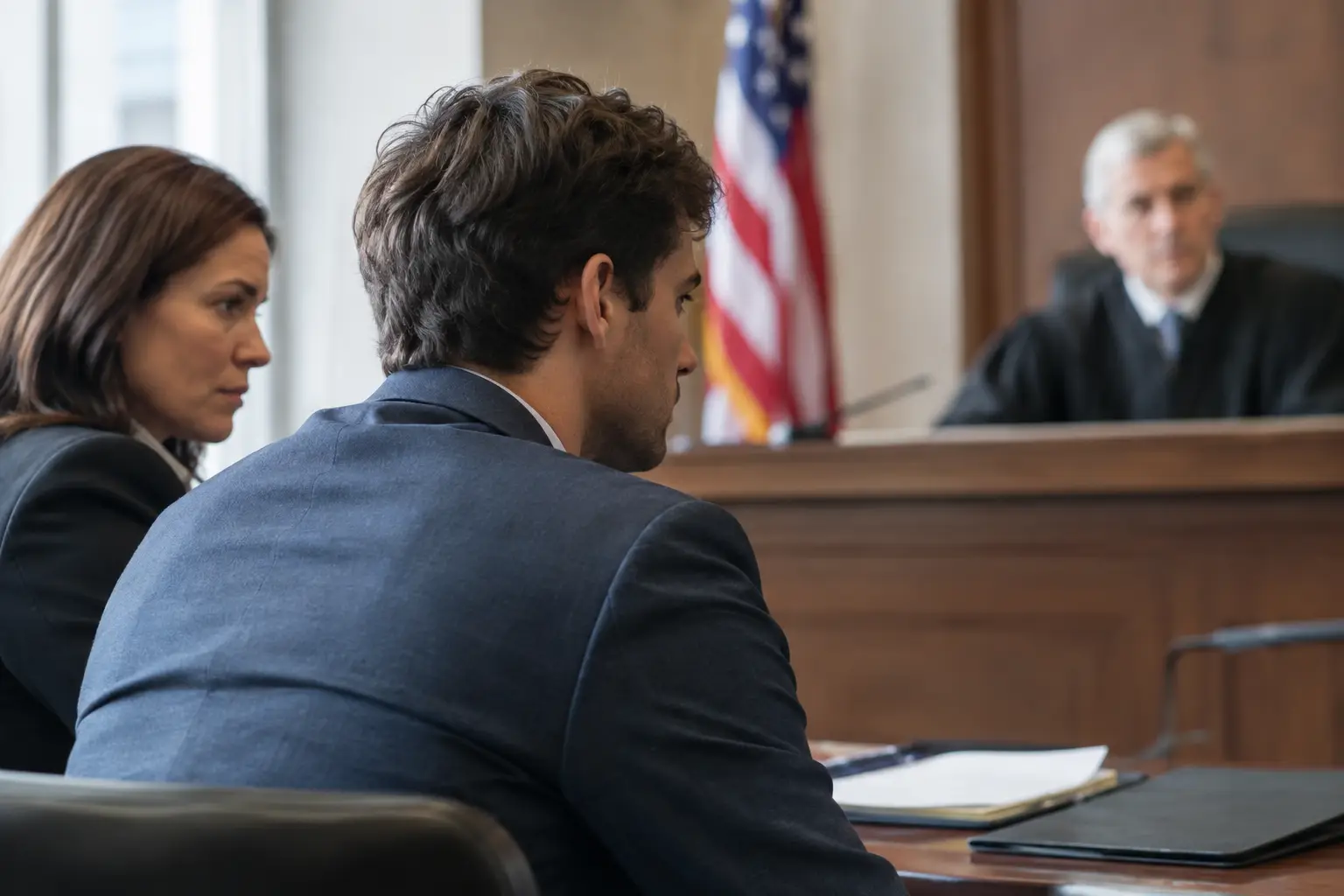
A bond hearing in a sex crime case is not a routine paperwork stop. It may decide whether you go home, where you can live, whether you can see your children, and what restrictions control your life while the case is pending. In Miami and throughout Florida, prosecutors often push hard for high bonds and harsh conditions before the defense has had time to expose the weaknesses in the accusation.
The first hearing moves fast. The consequences do not. A man facing a sexual battery, lewd and lascivious, internet sex crime, CSAM, trafficking, or related allegation needs a defense strategy working before the court locks in terms that can damage his family, career, and ability to fight the case.
What Happens at a Bond Hearing in a Sex Crime Case
After an arrest, a Florida defendant generally appears before a judge for a first appearance within 24 hours. The court addresses probable cause, appoints counsel if necessary, and considers release. The judge may set a monetary bond, impose conditions of release, keep a previously set bond in place, or, in certain serious cases, hold the defendant without bond pending a more extensive hearing.
A bond hearing is not a trial. The state does not have to prove guilt beyond a reasonable doubt. But that does not mean the prosecutor gets a free pass to make broad, emotional claims without challenge. The defense must immediately focus the court on what the evidence actually shows, what remains unverified, and whether conditions short of detention can reasonably address the court’s concerns.
Sex crime allegations create a difficult environment from the start. Judges know the public pressure surrounding these accusations. Prosecutors may emphasize the charge label, alleged victim vulnerability, inflammatory statements, or selected digital evidence. A strong defense does not ignore the seriousness of the accusation. It forces the discussion back to facts, reliability, and the law.
What Florida Judges Consider When Setting Bond
Bond is not supposed to be punishment before conviction. The court’s central concerns are whether the accused will appear in court and whether release presents a danger to the community, alleged victim, or witnesses. In practice, the details presented at this early stage can heavily influence the result.
The judge may consider the nature of the allegation, the defendant’s criminal history, any prior failures to appear, ties to the community, employment, residence, family responsibilities, and the strength of the probable cause affidavit. The court may also consider whether there are allegations of threats, coercion, witness contact, use of a position of trust, or conduct involving a minor.
A defense lawyer should be prepared to present the full picture, not the prosecutor’s one-sided version. Stable employment, a long-term Florida residence, military service, caregiving obligations, lack of criminal history, voluntary cooperation, and a reliable support system can matter. So can the absence of corroboration, contradictions in the allegation, unexplained reporting delays, missing communications, or digital evidence that has not been properly examined.
The right argument depends on the case. In some matters, a clean record and strong community ties are central. In others, the immediate priority is showing that the state’s version relies on a disputed text exchange, an unreliable identification, a contested forensic claim, or an accusation made during a custody, relationship, employment, or financial conflict.
Bond Conditions Can Be as Serious as the Bond Amount
Getting released is only part of the battle. Courts frequently impose conditions that reach deep into a defendant’s daily life. A judge may order no contact with an alleged victim or witnesses, prohibit contact with minors, require GPS monitoring, restrict internet use, impose a curfew, require home detention, order substance-abuse or mental-health evaluations, or limit travel.
Some restrictions may be justified by the specific allegations. Others may be unnecessarily broad, unworkable, or disconnected from the facts. A blanket no-contact order, for example, can create immediate problems when the alleged victim is a spouse, co-parent, family member, coworker, or person living in the same home. An internet restriction can put a professional out of work before he has had a meaningful chance to defend himself.
These conditions must be taken seriously. Do not call, text, message, follow, or ask another person to contact someone protected by a no-contact order. Do not assume an apology, a mutual desire to speak, or a social media reply makes contact permissible. A violation can lead to arrest, bond revocation, new charges, and a much harder path back to release.
If a condition is unreasonably broad or impossible to follow, the answer is not to ignore it. The answer is to have counsel seek clarification or modification from the court. Strategic action protects you. Improvised action gives the state another weapon.
When the State Seeks No Bond
Certain sex crime allegations carry extraordinary exposure. Depending on the charge and the facts, the state may seek pretrial detention or argue that no bond should be allowed. Florida law permits detention in limited circumstances, but the prosecutor must meet a demanding legal standard when seeking to hold someone without bond.
In the most serious cases, the court may conduct what is commonly called an Arthur hearing. The issues can include whether the proof of guilt is evident or the presumption is great, along with whether any conditions of release can protect the community and ensure court appearance. This is not a hearing to treat casually. It demands targeted legal research, aggressive factual preparation, and a defense lawyer ready to confront the state’s evidence early.
The prosecution may arrive with an arrest affidavit and a dramatic narrative. The defense must identify what is missing: incomplete messages, untested devices, hearsay statements, lack of medical or forensic support, credibility issues, alternative explanations, or evidence inconsistent with the accusation. The goal is not rhetoric. The goal is control of the record when control matters most.
Evidence Starts Matterings Before Trial
The period immediately after arrest is dangerous because evidence can disappear, witnesses can be influenced, and the state’s theory can harden before anyone challenges it. In digital sex crime cases, a device seizure, account login, IP address, chat log, image metadata, or alleged online communication may look simple on paper while raising major questions about access, authorship, context, preservation, and forensic handling.
In credibility-driven allegations, early defense work may involve locating neutral witnesses, preserving relevant communications, identifying prior inconsistent statements, reviewing timelines, and examining motives to fabricate or exaggerate. A delayed report does not automatically prove an allegation false, just as an accusation alone does not prove it true. The facts must be tested.
That work should begin immediately, not after months of waiting. Do not delete texts, emails, photographs, social media content, or files from any device. Do not try to explain your side to the accuser, a witness, police officer, employer, or investigator. Do not hand over passwords or consent to searches without legal advice. What feels like a quick way to clear things up can create evidence the state will use against you.
Preparing for a Florida Bond Hearing
Your lawyer needs accurate information fast. That includes the arrest paperwork, the alleged charge, your criminal history if any, your employment details, address, family circumstances, medical needs, and any active injunctions or pending cases. It also includes information that may contradict the allegation, but it must be shared privately and candidly with counsel.
Family members can help by gathering proof of employment, residency, caregiving duties, treatment history, and community support when appropriate. They should not contact the alleged victim, investigate through social media, pressure witnesses, or post about the case. Public arguments and online defenses can become exhibits.
If bond is set beyond what your family can realistically pay, counsel may be able to seek a reduction or modified conditions. A high bond is not automatically permanent. But the request must be supported by facts and framed with an understanding of the court’s concerns. The defense must show the judge a practical, enforceable plan for release rather than simply asking for leniency.
A bond hearing can be the first major fight in a sex crime case, and the state’s version should not be the only version the judge hears. Your freedom, your family, and your ability to build a defense may depend on what happens in those first hours. Get experienced counsel involved before temporary restrictions become the new normal.