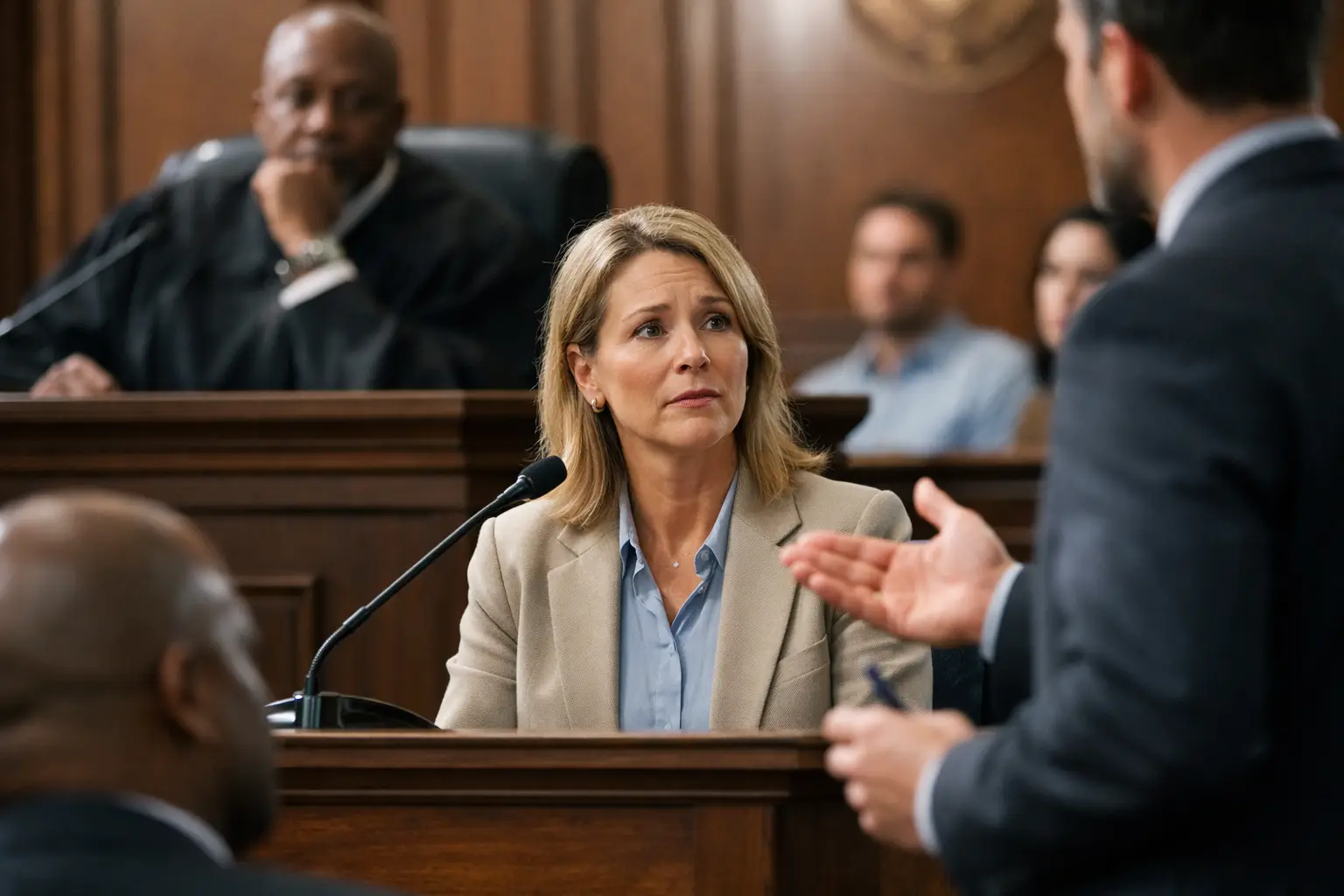
A criminal case can turn on one person’s account of what happened. In allegations involving sexual battery, lewd conduct, online communications, or other sex crimes, prosecutors may build the case around a witness whose testimony appears powerful at first glance. But how witness credibility gets challenged is not about insults, intimidation, or attacking someone for reporting a crime. It is about testing whether the evidence is accurate, complete, reliable, and legally admissible.
That distinction matters. A serious accusation does not eliminate the State’s burden of proof. Before a jury can rely on a witness, the defense has the right to examine what the witness said, when they said it, what evidence supports it, and whether outside pressures, faulty memory, or missing context affected the account.
How Witness Credibility Gets Challenged
Credibility is rarely destroyed by one dramatic courtroom moment. More often, it is tested piece by piece. A defense attorney compares interviews, police reports, text messages, social media activity, medical records when legally available, surveillance footage, phone data, and testimony from other witnesses. The objective is to identify whether the story stays consistent when measured against the record.
A difference in wording alone does not automatically mean a witness is lying. People can remember traumatic, stressful, or fast-moving events differently. But a material inconsistency can matter when it concerns a central fact: who initiated contact, when an alleged event occurred, whether someone was present, what was communicated before or afterward, or whether a physical description matches objective evidence.
The defense must also distinguish between an honest mistake and a deliberate falsehood. Either can create reasonable doubt. The question is not whether a witness is perfect. The question is whether the prosecution can prove its case beyond a reasonable doubt with evidence that holds up under pressure.
Prior Statements Can Reveal Gaps and Changes
The first report to law enforcement is not always the same as a later statement to detectives, prosecutors, family members, medical personnel, or a jury. That does not make every later detail suspect. Additional details may emerge for legitimate reasons. Still, a careful defense investigates why the account changed and whether the change is significant.
For example, an initial statement may place an encounter at a certain location or time, while later testimony moves it after location records, work schedules, or video footage become available. A witness may initially deny post-incident contact, then messages show continued communication. Or a report may omit facts that later become central to the accusation.
Cross-examination can expose those gaps, but preparation starts long before trial. Counsel must obtain and organize recordings, written reports, body-camera footage, dispatch logs, and prior testimony. The exact words matter. So does the sequence in which questions were asked. A summary written by an officer is not the same thing as a recorded statement from the witness.
Digital Evidence May Confirm or Contradict Testimony
Modern sex-crime allegations often involve digital evidence. Texts, direct messages, call logs, location data, cloud backups, dating-app messages, rideshare records, building access logs, and deleted-content recovery can change the direction of a case.
A screenshot is not the full conversation. It may omit messages sent before or after the image, leave out usernames and timestamps, or fail to establish who controlled an account. A message thread may also be incomplete, altered, or taken out of context. On the other hand, full device extraction and properly preserved records can support a witness’s version. The defense has to follow the evidence, not assume the answer.
This is why accused men should not delete messages, reset phones, contact an accuser, or ask friends to “fix” the situation. Those choices can create new legal problems and give the prosecution ammunition. Preserve what exists. Tell your attorney where relevant data may be found. Let the defense team determine what can be collected, authenticated, and used lawfully.
Context Is Not an Excuse
In a sex-crime case, friendly messages, prior contact, or a lack of visible injury do not automatically resolve questions of consent or credibility. Every allegation has facts that must be assessed carefully. But context can challenge an incomplete narrative, particularly when the State presents selected messages or a timeline that ignores evidence pointing the other way.
A disciplined defense does not rely on stereotypes about how any person “should” behave after an alleged assault. Those assumptions are unreliable and can backfire with a jury. The stronger approach is specific, verifiable evidence: timestamps, locations, full communications, independent witnesses, and documented timelines.
Bias, Motive, and Outside Pressure Can Matter
Witnesses are human. They may have personal conflicts, financial concerns, custody disputes, workplace disputes, relationship fallout, fear of consequences, or loyalty to someone else involved in the case. These facts do not prove a witness fabricated an accusation. They can, however, affect how a jury evaluates the witness’s ability or motivation to provide an accurate account.
A defense investigation may examine whether an accusation followed a breakup, an argument, a threat of exposure, a dispute over money, or a pending family-law conflict. It may also assess whether a witness had reason to shift blame away from their own conduct or another person’s conduct.
The method matters. Jurors respond to facts, not cheap attacks. A lawyer who can show a concrete reason for bias, supported by messages, records, or neutral testimony, is far more effective than one who simply calls a witness angry or vindictive.
Memory and Perception Are Not the Same as Certainty
A confident witness is not necessarily an accurate witness. Memory can be affected by lighting, distance, alcohol or drugs, stress, sleep deprivation, the passage of time, and repeated conversations about the event. Suggestive questioning can also influence how a person remembers details.
In cases involving identification, the defense may examine the conditions under which the witness saw the person, how law enforcement conducted a photo lineup, and whether the witness had prior exposure to the accused’s image. In cases involving intoxication, the defense may investigate the witness’s ability to perceive events and later recall the sequence accurately.
This area requires care. Challenging perception is not the same as claiming a witness is morally defective. It is an evidence question: could the witness actually observe and remember what they now say happened?
The State’s Investigation Can Affect Credibility
Witness credibility cannot be separated from the investigation. Detectives may fail to preserve a phone, interview a potentially favorable witness, collect surveillance footage before it is overwritten, or document inconsistencies accurately. They may accept a narrative before testing alternative explanations.
When an investigation is incomplete, the defense can show the jury what law enforcement did not do. Missing evidence does not always help the accused. But when investigators ignored obvious leads that could confirm or disprove a key claim, that failure can weaken the State’s presentation.
Independent investigation is often decisive. A defense team may locate witnesses before memories fade, secure lawful records, map a timeline, review digital materials, and identify evidence the police never pursued. In a high-stakes case, waiting until charges are filed can mean losing evidence that could have changed the result.
Credibility Challenges Have Legal Limits
Not every damaging fact about a witness can be presented to a jury. Florida evidence rules limit certain attacks on character and restrict the use of sexual-history evidence. Those limits exist for good reason. A defense attorney must know what can be investigated, what can be used in negotiations, and what a judge may permit at trial.
That is why an aggressive defense is not reckless. It is strategic. The goal is to put legally admissible, persuasive facts in front of the decision-maker while protecting the accused from self-inflicted damage. An uncontrolled confrontation, a social-media post, or a direct call to the complaining witness can undermine defenses that careful legal work might otherwise establish.
If you are under investigation or facing a charge, act before the prosecution’s version hardens into the only version. Preserve evidence, stay silent with police until you have counsel, follow any court orders, and give your lawyer the full truth – including facts you think may look bad. A prepared defense can confront weak testimony with records, context, and disciplined trial strategy when your freedom, reputation, family, and future are on the line.